
2000 Sacagawea Dollar Value Guide: The 2000 Sacagawea Dollar arrived at the start of a new millennium with bold expectations. The United States Mint introduced it as a modern replacement for the Susan B. Anthony dollar, hoping its golden color and fresh design would finally make dollar coins popular in everyday transactions. While it never became widely used in circulation, the coin quietly developed a strong following among collectors. Today, certain 2000 Sacagawea dollars are worth far more than one dollar, especially those with rare mint errors or exceptional condition.
Understanding what makes these coins valuable can help collectors and everyday holders determine whether they own a hidden treasure.
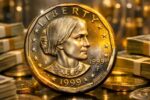
Golden Coin That Changed History
The 2000 Sacagawea Dollar stands out because of its unique golden appearance. Unlike traditional silver-colored coins, this dollar was struck using a manganese-brass alloy layered over a pure copper core. The warm color was meant to distinguish it from quarters and prevent confusion in circulation. The obverse design, created by sculptor Glenna Goodacre, features Sacagawea carrying her infant son, Jean Baptiste. The reverse, designed by Thomas D. Rogers, showcases a soaring eagle symbolizing freedom and strength. This combination gave the coin immediate visual appeal and historical importance.
Why Condition Drives Value
Condition plays a massive role in determining the value of a 2000 Sacagawea Dollar. Most circulated examples remain worth only face value. However, uncirculated coins graded MS65 or higher can command significantly higher prices. Coins graded MS67 or MS68 are especially rare because dollar coins often show contact marks easily. A flawless, high-grade specimen can sell for hundreds or even thousands of dollars at auction. Collectors look for sharp details, strong luster, and minimal surface imperfections when evaluating these coins.
Cheerios Dollar Sparks Frenzy
One of the most famous varieties is the “Cheerios Dollar.” In early 2000, the U.S. Mint partnered with General Mills to include 5,500 Sacagawea dollars inside Cheerios cereal boxes as part of a promotional campaign. These special coins feature enhanced eagle tail feathers on the reverse. At first, many people overlooked the difference. Later, collectors realized the detail variation was unique. Authentic Cheerios Dollars in high grades have sold for thousands of dollars, making them one of the most valuable modern U.S. coin varieties.
Wounded Eagle Error Mystery
Another highly sought-after variety is known as the “Wounded Eagle” error. This error shows what appears to be a spear-like die gouge across the eagle’s belly on the reverse. The line looks dramatic and immediately noticeable once identified. It was caused by a damaged die during minting. Depending on condition, Wounded Eagle errors can sell for several hundred dollars or more. Because the error is visible without magnification, many collectors actively search rolls hoping to discover one.
Mule Error Shocks Collectors
The 2000 Sacagawea Dollar Mule error is one of the rarest modern U.S. coin mistakes ever discovered. A small number of coins were accidentally struck using the obverse of the Sacagawea Dollar and the reverse of a Washington State Quarter. This incredible minting mistake created a hybrid coin never intended for circulation. Only a few examples are known to exist. When they appear at auction, prices often reach tens of thousands of dollars. It remains one of the most famous error coins in modern numismatics.
Off Center Strikes Gain Attention
Off-center strike errors occur when a coin blank is misaligned during the striking process. The result is a partially blank design where part of the image is missing. In the case of the 2000 Sacagawea Dollar, dramatic off-center errors can bring strong premiums depending on how much of the design is visible. Coins that still show a complete date are generally more desirable. These errors remind collectors that even modern coins can have fascinating production mistakes.
Planchet Errors Increase Demand
Planchet errors happen before the coin is even struck. Some 2000 Sacagawea Dollars were minted on improperly prepared blanks, resulting in missing clad layers or unusual surfaces. Occasionally, coins have been found struck on foreign planchets or experimental blanks. These rare mistakes create unique textures, color variations, or weight differences. Because such errors are uncommon, collectors often pay premium prices for certified examples. Authenticating these coins through professional grading services is crucial before assuming significant value.
Proof Coins Hold Premium
In addition to circulation strikes, the U.S. Mint produced proof versions of the 2000 Sacagawea Dollar for collectors. Proof coins feature mirror-like backgrounds and frosted designs created through special minting techniques. While standard proof coins are not extremely rare, deep cameo examples in flawless condition can command higher prices. Collectors often seek proof coins graded PR69 or PR70. These coins are typically found in original Mint packaging but may also appear in certified holders at coin auctions.
Market Trends Keep Rising
Interest in modern error coins continues to grow. As more collectors enter the hobby, demand for rare 2000 Sacagawea Dollar varieties has steadily increased. Auction results show strong performance for high-grade examples and certified error coins. The combination of historical significance, unique minting mistakes, and limited availability fuels market enthusiasm. While not every 2000 Sacagawea Dollar is valuable, select varieties have proven to be long-term winners in the numismatic world.
How To Check Yours
Examining your 2000 Sacagawea Dollar carefully can make all the difference. Start by identifying the mint mark, located below the date. Coins were struck in Philadelphia, Denver, and San Francisco. Use good lighting and magnification to inspect the reverse eagle design, especially the tail feathers and belly area. Look for unusual lines, doubling, or misalignment. If you suspect an error, consider having the coin evaluated by a professional grading service to confirm authenticity and condition.
The 2000 Sacagawea Dollar may look like an ordinary golden coin, but hidden within this modern issue are rare errors and varieties worth serious money. While most examples remain worth face value, special pieces such as the Cheerios Dollar, Wounded Eagle error, and Mule error can command impressive premiums. Careful inspection, proper storage, and professional grading can turn a simple dollar coin into a valuable collector’s item. For those willing to look closely, this millennium coin still holds exciting surprises.