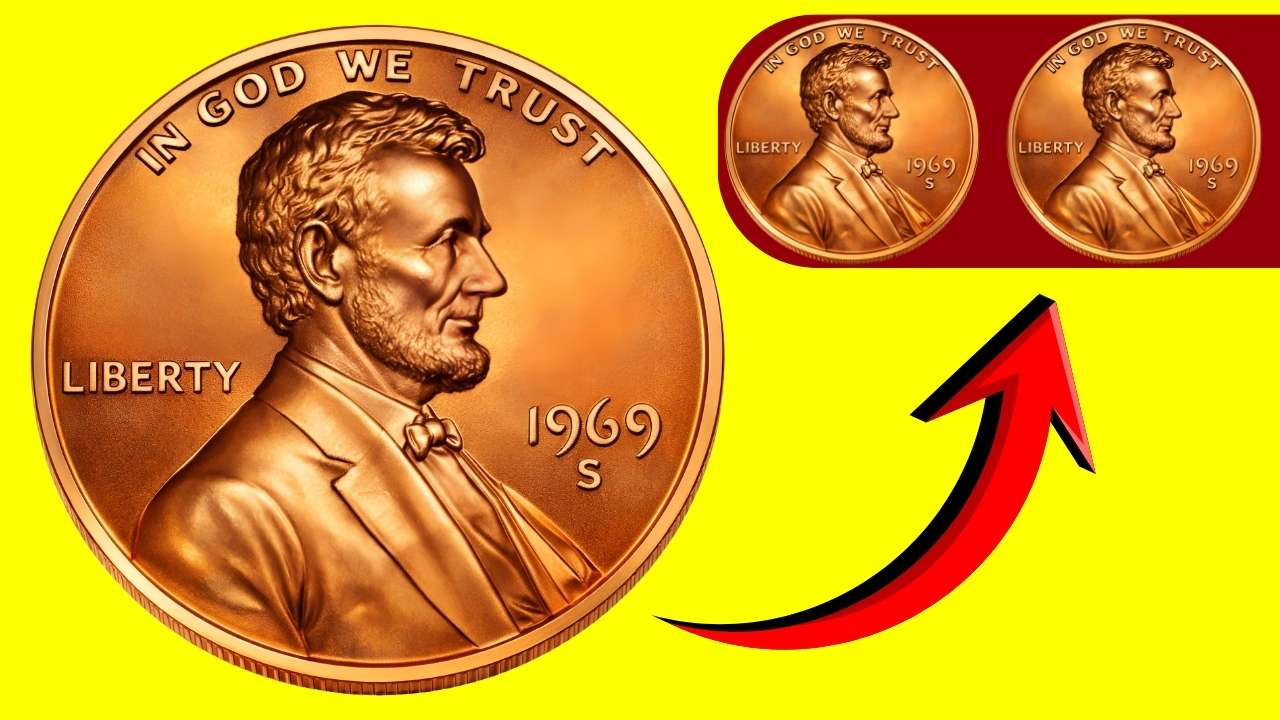
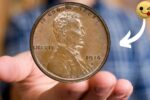
1969-S Doubled Die Penny Worth $150,000: The world of coin collecting has always been filled with surprising stories, but few are as fascinating as the 1969-S Doubled Die Lincoln cent. A small copper coin originally worth just one cent has reportedly reached auction prices as high as $150,000 in top condition. That headline alone has sparked renewed interest among collectors and everyday people who are now carefully checking their old change jars. But what makes this coin so valuable, and how can you tell if you have the real thing?
Below is a completely fresh, detailed guide to understanding this famous error coin and how to identify it correctly.
The Coin That Shocked Collectors
The 1969-S Doubled Die penny quickly became legendary because of the dramatic nature of its error. Unlike subtle mint mistakes that require expert knowledge to detect, this coin displays bold, visible doubling on the obverse design. When it was first discovered, even experienced collectors were stunned by how clear the doubling appeared.
What truly shocked the hobby was the market value. Over the years, certified examples in strong condition have crossed six figures at auction. That price level pushed the coin into elite territory, placing it among the most desirable Lincoln cent varieties ever produced.
Understanding The Minting Mistake
To appreciate why this penny is valuable, it helps to understand how the error happened. During the die creation process, the design hub impressed the coin die more than once. If those impressions were slightly misaligned, the final die carried a doubled image. Every coin struck from that flawed die then displayed the same doubling.
On the 1969-S Doubled Die cent, the doubling is not random or accidental damage. It is part of the design itself. The doubling appears sharp and rounded, which clearly separates it from machine doubling that often looks flat or shelf-like.
This technical difference is crucial when identifying a genuine example.
Bold Doubling You Cannot Miss
The most noticeable feature of this rare penny is the dramatic doubling on the front side. The words LIBERTY and IN GOD WE TRUST show strong separation between the original design and the doubled image. The numbers in the date 1969 also display visible doubling.
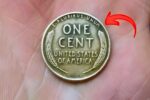
One important detail collectors must remember is that the “S” mintmark is not doubled. During that era, mintmarks were punched separately onto the die. Because of that, the mintmark appears normal even on authentic doubled die coins.
If you see doubling on the mintmark itself, it is almost certainly not the famous variety.
Why The San Francisco Mint Matters
The “S” mintmark beneath the date indicates that the coin was struck at the San Francisco Mint. This is a critical part of identification. Many collectors have mistakenly believed they found a rare coin, only to discover it was a Philadelphia issue without the “S.”
There were counterfeit versions discovered years ago that lacked the mintmark, and authorities even investigated some early finds before confirming authenticity standards. Today, any legitimate 1969 doubled die cent must have the correct “S” mintmark placement and style.
Checking this small detail can save you from costly mistakes.
Condition Drives The Price Sky High
Not every authentic 1969-S Doubled Die penny automatically brings $150,000. Condition plays a massive role in determining value. Coins are graded on a scale that measures wear, luster, surface preservation, and strike quality.
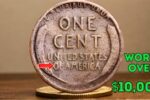
Here is a simplified value comparison:
Circulated examples with noticeable wear
Often trade between $25,000 and $45,000 depending on eye appeal
Lightly circulated or About Uncirculated coins
May reach $60,000 to $85,000
High Mint State certified examples
Have surpassed $125,000 and approached $150,000 in competitive auctions
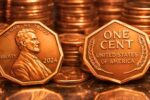
Collectors are willing to pay premiums for coins with strong red color and minimal marks.
Fake Versions Flood The Market
Because of its reputation, the 1969-S Doubled Die penny has been widely faked. Some counterfeits involve adding a false “S” mintmark to a regular 1969 coin. Others attempt to create artificial doubling through mechanical alterations or engraving.
A common mistake beginners make is confusing machine doubling with true doubled die characteristics. Machine doubling appears as a flat, secondary image that looks shaved or smeared. In contrast, real doubled die coins have rounded, distinct secondary images with clear separation lines.
Professional authentication is strongly recommended before attempting to sell any suspected example.
How To Check Your Coin Properly
If you think you may have found one, careful examination is essential. Use a magnifying glass with at least 5x to 10x magnification. Place the coin under angled lighting rather than direct overhead light. This helps reveal the separation between doubled elements.
Focus on these checkpoints:
Clear separation in LIBERTY
Strong doubling in IN GOD WE TRUST
Distinct doubling in the numbers 1969
Normal looking “S” mintmark without doubling
Never clean the coin. Cleaning reduces value and may damage important surface details that graders use to confirm authenticity.
Why This Coin Still Excites Collectors
More than five decades after its release, the 1969-S Doubled Die penny continues to fuel treasure-hunting excitement. While most were likely discovered long ago, rare coins sometimes reappear through estate collections, inherited coin albums, and long-forgotten storage boxes.
The appeal lies in the possibility. Unlike modern limited releases that are carefully tracked, older coins sometimes slip through unnoticed. That uncertainty keeps collectors searching rolls of pennies and examining vintage collections carefully.
Even if you do not find this specific variety, learning how to identify mint errors can lead to discovering other valuable coins.
Final Verdict On The $150,000 Penny
The 1969-S Doubled Die Lincoln cent is not just a viral rumor. It is a verified, historically significant mint error that has achieved extraordinary auction prices in top grades. However, genuine examples are extremely rare, and the majority of 1969 pennies are worth only face value.
If your coin shows bold, unmistakable doubling on LIBERTY, IN GOD WE TRUST, and the date, along with the proper San Francisco mintmark, you may have something remarkable. Seek professional grading immediately to confirm authenticity.
A single penny may not usually change your life, but in rare cases like this one, it absolutely can.