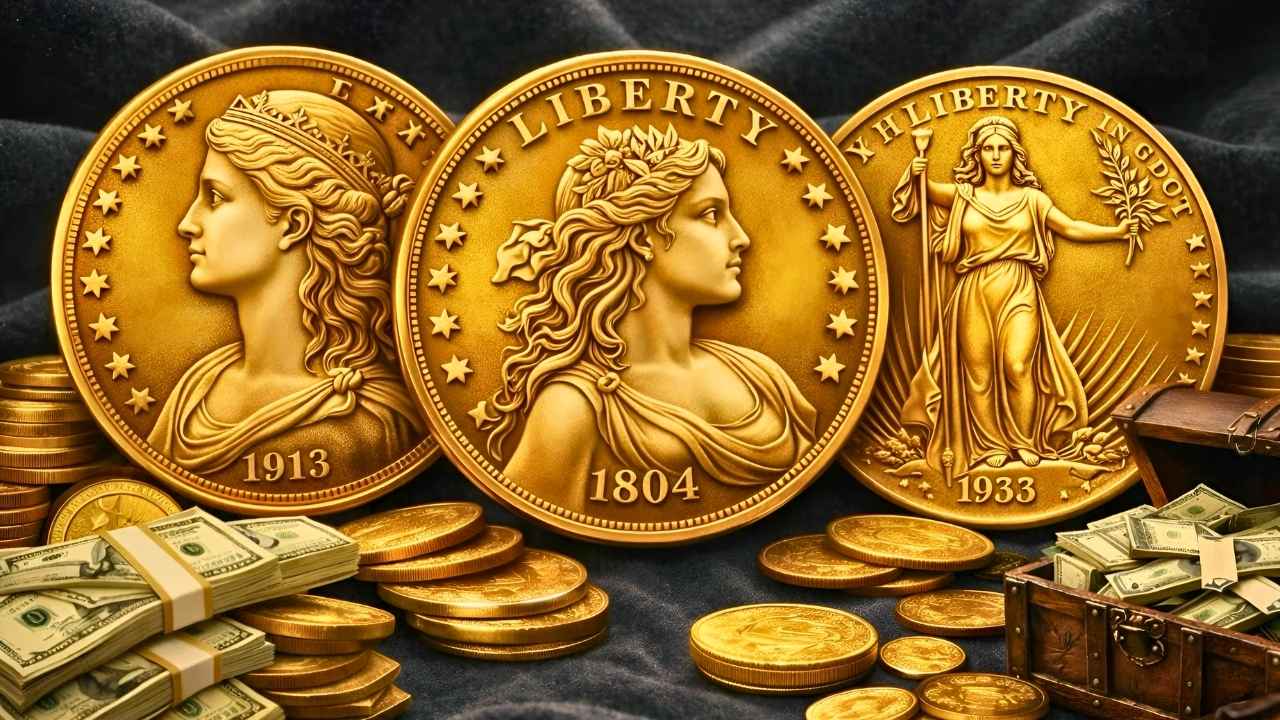
Retire Early with Coins: Rare coins are no longer just collectibles stored in velvet cases. In recent years, the spotlight on ultra-rare U.S. coins has intensified as record-breaking auction results grab global attention. A few historic American coins have crossed the $2.5 million mark, transforming from small pieces of metal into powerful financial assets. For collectors, investors, and everyday readers, these coins represent more than currency. They represent history, scarcity, and the possibility of extraordinary returns.
The rare coin market operates on a simple principle: limited supply meets strong demand. When only a handful of examples exist and wealthy collectors compete to own them, prices can surge beyond expectations. Below are three legendary U.S. coins that have surpassed $2.5 million in value and continue to dominate headlines in the numismatic world.

Birth Of American Dollar Glory
The 1794 Flowing Hair Silver Dollar stands at the very beginning of the United States monetary story. Produced shortly after the U.S. Mint was established, this coin symbolizes the nation’s first attempt at a standardized silver dollar. Its elegant design features Lady Liberty with flowing hair on the front and a small eagle on the back, reflecting early American artistic style.
What makes this coin extraordinary is not just its age but its importance. Many experts believe it may have been among the first silver dollars ever struck by the Mint. Only a limited number survive today, and even fewer exist in high grades. Because of this combination of historical significance and scarcity, top-quality examples have sold for well above $2.5 million, with record-breaking prices in elite auctions.
Mystery Nickel That Shook Collectors
The 1913 Liberty Head Nickel remains one of the most intriguing coins in U.S. history. Official records indicate that Liberty Head nickels were not supposed to be produced in 1913, as the design had already transitioned to the Buffalo Nickel. Yet somehow, five examples dated 1913 exist today.
This mystery has fueled collector fascination for decades. The coin’s uncertain origin, extremely limited quantity, and strong collector demand have elevated it into the multi-million-dollar category. Each time one of these five nickels appears at auction, it becomes a major event. Several sales have crossed the $2.5 million mark, proving that rarity combined with a compelling backstory can dramatically increase value.
Gold Coin Lost And Reborn
The 1933 Saint-Gaudens Double Eagle carries a dramatic and complex history. Although thousands were minted, most were never officially released into circulation due to changes in U.S. gold policy during the Great Depression. Nearly all were melted down, leaving only a tiny number that escaped destruction.
Legal battles over ownership and authenticity have added to the coin’s legend. When one authenticated example was legally sold at auction, it shattered expectations and set new records far beyond $2.5 million. The coin’s stunning design, created by renowned sculptor Augustus Saint-Gaudens, combined with its turbulent history, makes it one of the most desirable American gold coins ever produced.
Why Condition Changes Everything
In the rare coin world, condition can mean the difference between thousands and millions. Coins are graded on detailed scales that evaluate surface preservation, strike quality, and overall appearance. A coin in near-perfect condition with minimal wear commands a much higher price than a similar coin showing signs of circulation.
Professional grading services use strict standards to certify coins. Investors often rely on these certifications when bidding in high-value auctions. Even among the rarest coins, a single point difference in grade can translate into a massive jump in price. That is why preservation, storage, and authentication are essential in the high-end numismatic market.
Auction Hype And Global Demand
The surge in rare coin values is closely tied to high-profile auctions. International buyers, wealthy collectors, and investment groups regularly compete for iconic American rarities. Media coverage of record sales adds excitement and attracts new participants into the market.
Rare coins are also increasingly viewed as alternative assets. Unlike stocks or real estate, ultra-rare coins exist in extremely limited quantities. Their tangible nature and historical significance provide emotional appeal alongside financial potential. However, the market remains specialized and requires deep knowledge before making serious investments.
Hidden Treasure Or Smart Strategy
While stories of multi-million-dollar coins spark excitement, finding such a rarity in everyday circulation is highly unlikely. Most ultra-valuable coins are already known, documented, and carefully tracked. Still, valuable coins can appear in inherited collections or long-forgotten storage boxes.
Collectors interested in rare coins should focus on education first. Understanding mint years, production numbers, design changes, and authentication processes helps reduce risk. Consulting reputable dealers and professional graders is critical when evaluating high-value pieces. Even coins worth tens of thousands of dollars can significantly impact personal finances if properly authenticated and sold.

Scarcity Meets National History
What truly sets these coins apart is their connection to key moments in American history. The 1794 Silver Dollar represents the birth of federal currency. The 1913 Liberty Head Nickel highlights unusual circumstances within Mint production. The 1933 Double Eagle reflects economic turmoil and government policy shifts during the Great Depression.
These coins are not simply metallic objects. They are physical reminders of political change, artistic achievement, and economic transformation. Collectors value that historical depth just as much as rarity. The combination of storytelling and scarcity fuels long-term demand.
Final Verdict On Million Dollar Coins
Retiring early with a single coin is rare, but not impossible. The 1794 Flowing Hair Silver Dollar, the 1913 Liberty Head Nickel, and the 1933 Saint-Gaudens Double Eagle prove that extraordinary value can exist in small, historic pieces of metal. Each has surpassed $2.5 million due to a powerful blend of scarcity, historical significance, and collector passion.
For most individuals, rare coin collecting should be approached as a carefully researched hobby or long-term investment strategy rather than a guaranteed shortcut to wealth. Yet the possibility remains fascinating. In the world of numismatics, history and rarity can combine to create fortunes that fit in the palm of your hand.